
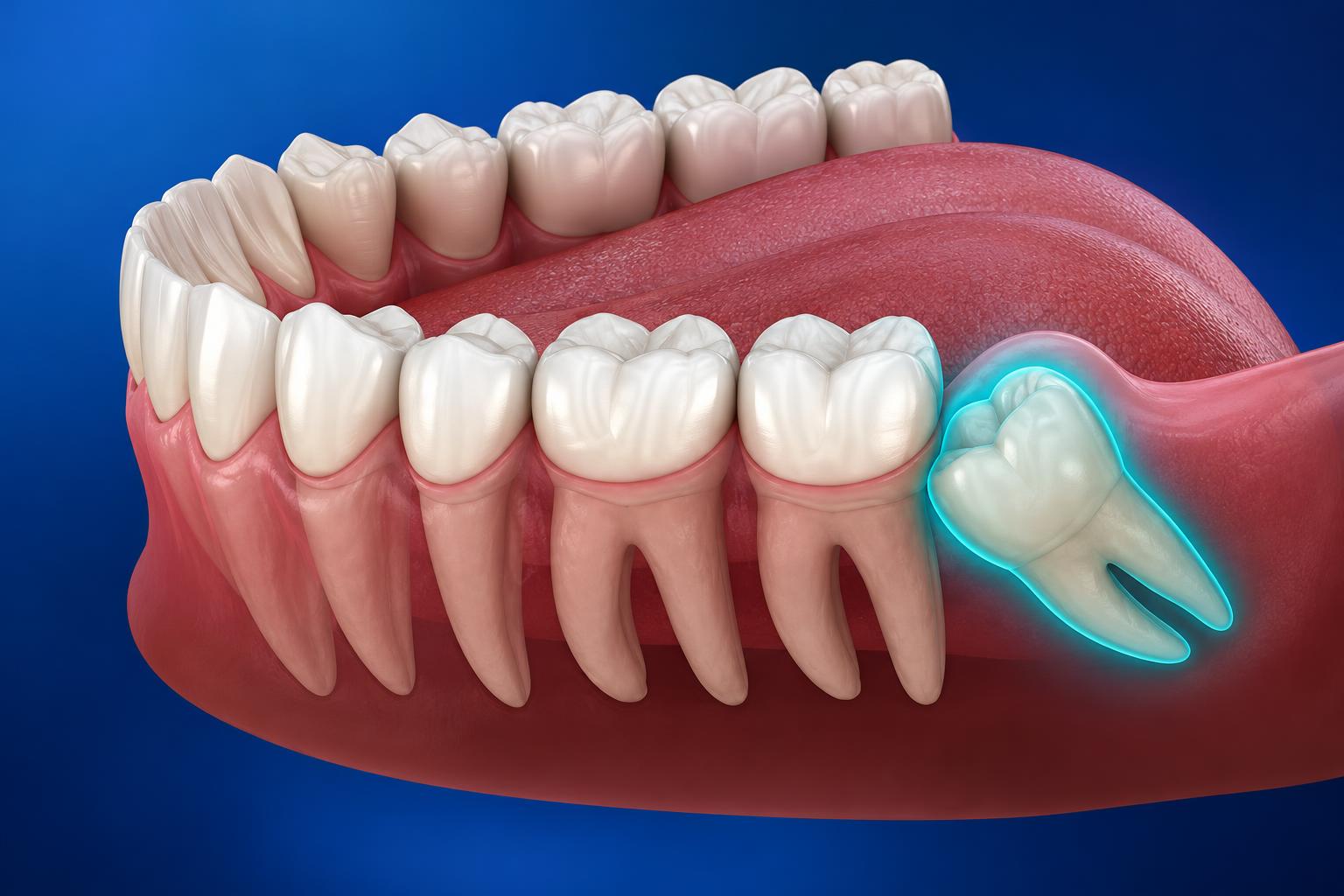
Why impacted molars matter
A wisdom tooth that is trapped under gum or bone can push on neighboring teeth, trap bacteria, form cysts, and cause recurring infection and pain.
- Crowding and shifting of front teeth
- Gum infection (pericoronitis)
- Decay of the second molar
- Cysts that can damage jawbone
3D imaging for precise planning
We use cone-beam 3D imaging to map each tooth's exact position relative to nerves and sinuses, so your surgery is planned to the millimeter before you arrive.
Comfortable, pain-free IV sedation
Most patients choose IV sedation and remember little or nothing of the procedure. Dr. A is trained to administer and monitor anesthesia in-office throughout your visit.
Safe care for teens and young adults
We walk parents through every step, explain sedation in plain terms, and personally follow up after surgery — including after-hours calls to check in.
Recovery timeline
Day 1–2
Rest, cold compresses, soft cool foods. Some swelling is normal.
Day 3–4
Swelling peaks then eases. Begin gentle salt-water rinses.
Day 5–7
Most patients return to school or work and normal routines.
Week 2+
Gum tissue continues healing; return to a full diet.