
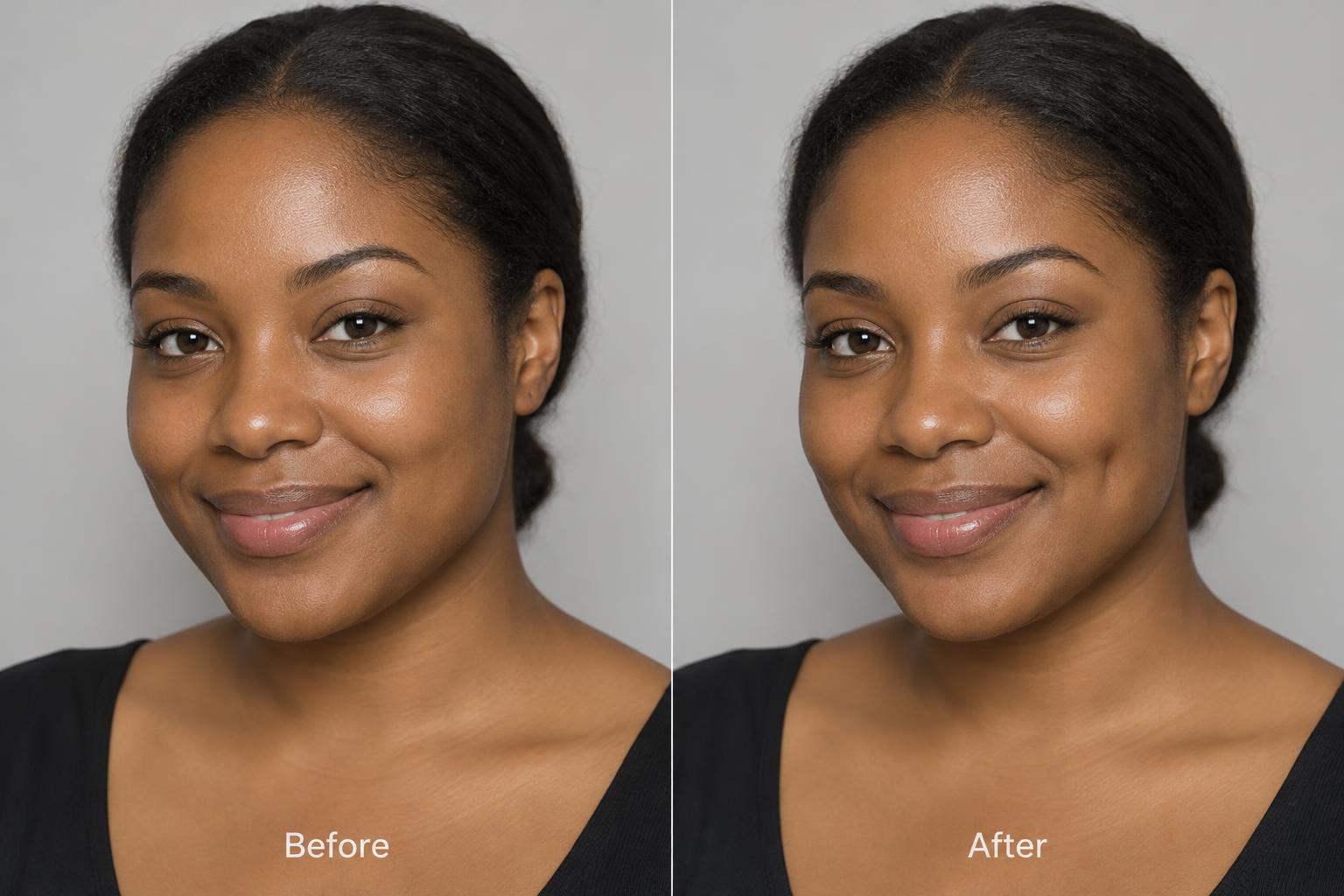
Who is a good candidate?
Healthy adults who want a natural dimple when smiling and have realistic expectations. We review your facial anatomy, cheek thickness and smile to choose the ideal position.
- Marked with you while smiling
- One or both cheeks
- Non-smokers heal best
How the procedure is performed
After local anesthesia, a small incision is made inside the cheek at the marked point. A tiny amount of tissue is removed and a dissolvable stitch connects the underside of the skin to the cheek muscle. When you smile, the muscle pulls the skin inward, forming the dimple.
Results and risks
The dimple may be visible even at rest for the first weeks, then softens to appear mainly when smiling. Possible risks include swelling, asymmetry, infection or a dimple that fades over time.
Recovery timeline
First week
Mild swelling and tenderness. Soft foods and gentle salt-water rinses.
2–4 weeks
Dimple at rest begins to soften as the stitch dissolves.
6–8 weeks
Final, natural-looking dimple when smiling.