
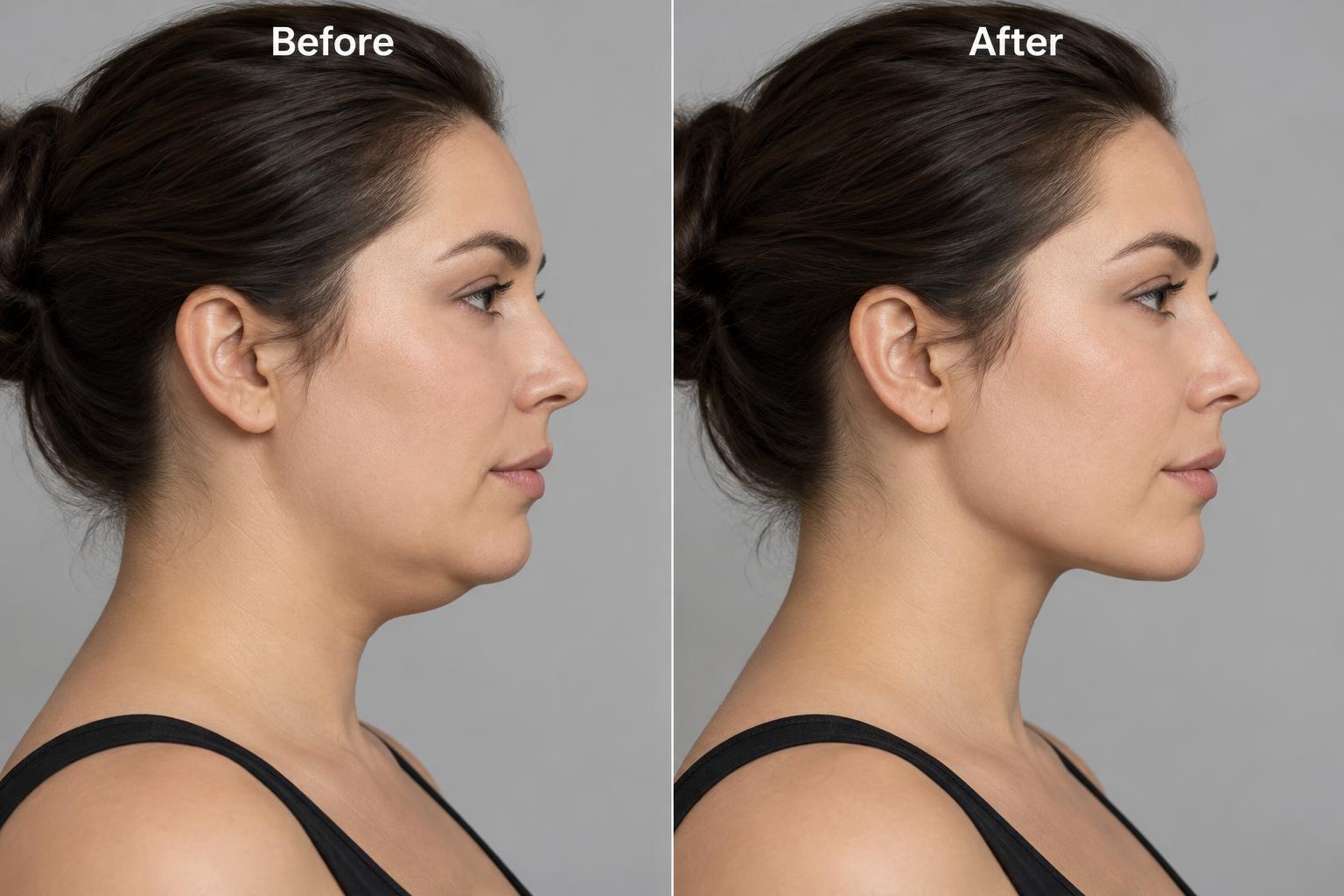
What causes fullness under the chin
Hereditary fat deposits, weight change and aging each contribute to a fuller under-chin area. Loose skin, a recessed or weak chin, and prominent neck muscles can look similar but are not corrected by removing fat. We assess which factor is dominant before recommending a procedure.
- Subcutaneous fat beneath the chin
- Skin laxity from aging or weight loss
- Jaw and chin position
- Deep neck structures
Am I a candidate?
A consultation reviews your health, weight stability, skin elasticity, jaw position and goals. Adults whose fullness comes mainly from fat beneath the chin, with good skin elasticity and realistic expectations, are the most likely to be satisfied.
- Stable weight and good skin elasticity
- Fullness mainly from fat, not loose skin
- Non-smoker or willing to stop before surgery
- Individualized, realistic goals
How the procedure is performed
Your surgeon selects local anesthesia with sedation, or general anesthesia, according to the treatment plan. One or two incisions of a few millimetres are placed under the chin. Fat is gently removed with a thin cannula, the incisions are closed, and a compressive garment is worn as directed.
What this procedure does not do
It does not remove excess skin, change the position of the jawbone, or treat deep neck structures. If skin laxity or jaw position is the main concern, a neck lift, chin implant or orthognathic surgery may be recommended instead — sometimes in combination with liposuction.
Risks and long-term considerations
This is surgery, not a risk-free shortcut. Possible complications include bleeding, infection, contour irregularity, temporary numbness, asymmetry, firmness under the skin, and rarely injury to nearby nerves or salivary glands. Results depend on your anatomy, healing and aging, and cannot be guaranteed.
Recovery timeline
First few days
Swelling, bruising and tenderness are expected. Rest, keep your head elevated and wear the compression garment as directed.
1–2 weeks
Most bruising and swelling fades. Sutures are removed or dissolve as directed, and light activity usually resumes.
6 weeks–3 months
The final contour becomes clearer as residual swelling resolves. Healing and appearance vary between individuals.